Learning strategy · Workforce development · Digital learning
Leslie Class
Learning Architect & Workforce Development Strategist
Explore the work, then tell me what you are building. I would love to hear about your goals and find a useful next step together.
Learning works better when the system behind it works together.
I help organizations turn fragmented training, content, workflows, learning infrastructure, and emerging capabilities such as AI into connected systems designed around people, performance, and measurable outcomes.
Strategize
Clarify goals, audiences, performance needs, constraints, and where emerging capabilities can add value.
Architect
Design the learning ecosystem, pathways, roles, infrastructure, and responsible use of technology.
Systemize
Turn the architecture into repeatable workflows, standards, resources, and practical operating practices.
Enable
Equip people to adopt, deliver, manage, and sustain the system—including new AI-enabled ways of working.
Optimize
Measure what is working, improve what is not, and evolve the system as needs and capabilities change.
What I help organizations build
Onboarding & Role Readiness
Help new and existing team members build the skills, knowledge, confidence, and AI-informed capabilities needed to contribute effectively.
Upskilling & Workforce Development
Design growth pathways that build capability, expand opportunity, strengthen the talent pipeline, and prepare people for evolving ways of working.
Technical & Operational Training
Create practical, job-relevant learning experiences that support real-world application, including the effective use of AI where it strengthens performance.
Learning Infrastructure & Governance
Align systems, processes, resources, responsibilities, and governance for sustainable learning environments that can adapt as technology evolves.
What changes
Clearer pathways from learning to performance
Learning initiatives connect directly to business goals, workforce needs, real-world outcomes, and the capabilities people need as work evolves.
More consistent learner and facilitator experiences
Clearer, more relevant experiences across teams, roles, and locations—with technology supporting people rather than adding unnecessary complexity.
Systems teams can actually manage and sustain
Practical structures, workflows, governance, and resources reduce complexity while creating clearer boundaries for responsible AI-enabled work.
Infrastructure that can adapt without rebuilding from scratch
Flexible systems evolve as priorities, people, technology, AI capabilities, and organizational needs change.
The goal is not simply more training or more technology. It is a connected learning system that uses the right capabilities—including AI where it adds value—to make the right performance easier to achieve and sustain.

See the system working together.
Strategy, learning, technology, people, and performance become more useful when they operate as parts of one connected ecosystem.
Strong learning ecosystems connect the right content, tools, decisions, resources, and people around how performance actually happens.

“The strongest learning systems do more than deliver knowledge. They create the conditions for people to grow, perform, and move forward with confidence. ”

Have a learning or workforce challenge?
Share a little about your organization, challenge, or initiative. I’ll review what you’re working toward and follow up about where LC Career Center may be able to help.
Tell me what you are trying to solve.
Share where the work stands today.
We can identify the right next step together.
See how strategy becomes learning systems built for real work.
Selected examples of how learning strategy is translated into experiences, infrastructure, performance support, and connected systems designed around how people learn, work, and perform.
Learning experiences designed to move people from understanding to confident performance.
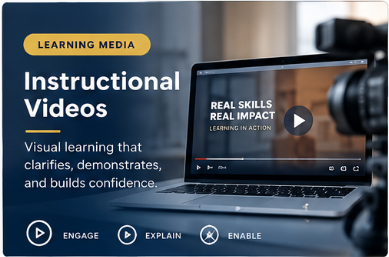
Instructional Videos
Turn complex information into clear, focused instruction learners can understand, revisit, and apply.
Architecture Behind the Work
Content architecture, instructional scripting, visual learning, knowledge transfer, and reinforcement.
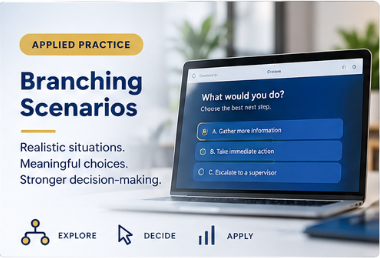
Branching Scenarios
Give learners a safe place to make decisions, experience consequences, and practice responding to realistic situations before performance matters.
Architecture Behind the Work
Scenario architecture, decision practice, applied learning, feedback strategy, and performance transfer.
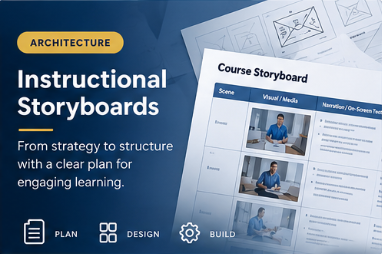
Instructional Storyboards
Translate learning strategy into a development-ready blueprint connecting content, sequencing, interactions, media, and learner experience.
Architecture Behind the Work
Learning architecture, curriculum sequencing, interaction design, design governance, and development readiness.
Learning infrastructure designed to connect people, content, processes, and delivery at scale.
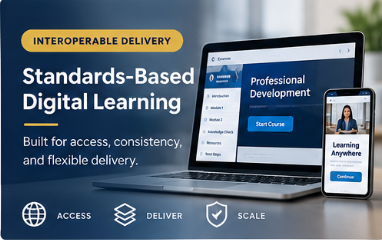
Standards-Based Digital Learning
Structure digital learning for consistent, flexible delivery across learning environments without tying the experience to a single platform.
Architecture Behind the Work
Interoperable learning design, scalable delivery, system integration, implementation standards, and deployment readiness.
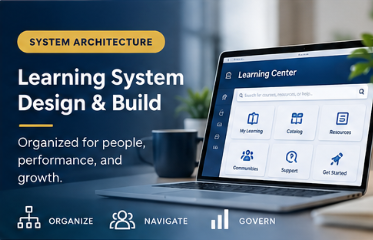
Learning System Design & Build
Architect the structure behind the learning experience— connecting curriculum, user journeys, navigation, governance, roles, and resources into one usable system.
Architecture Behind the Work
Learning ecosystem architecture, curriculum infrastructure, user journeys, governance, role design, and scalable implementation.
Extend learning beyond the course and into the moments where performance happens.
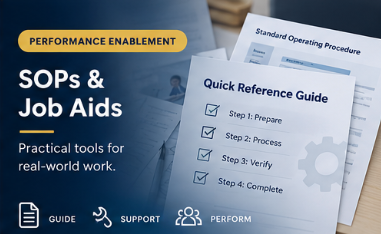
SOPs & Job Aids
Turn processes, procedures, and institutional knowledge into practical resources people can use when and where the work happens.
Architecture Behind the Work
Workflow architecture, process documentation, knowledge transfer, standardization, operational clarity, and performance support.

Interactive Digital Content
Transform dense or static information into structured digital resources that are easier to navigate, understand, and use.
Architecture Behind the Work
Content transformation, information architecture, visual learning, knowledge accessibility, and digital resource design.
One ecosystem. Different roles. Connected experiences.
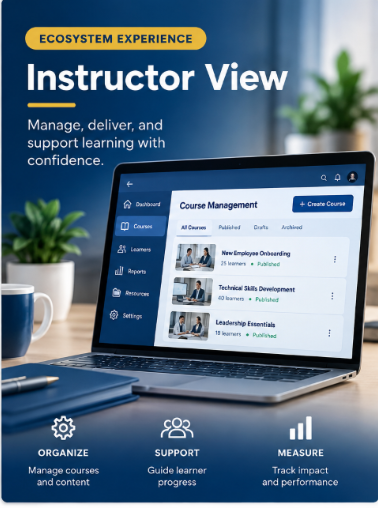
Learning System Architecture + Instructor Workflow
Experience Architecture
See how curriculum structure, course organization, learner management, resources, navigation, and delivery responsibilities come together to support the instructor experience.
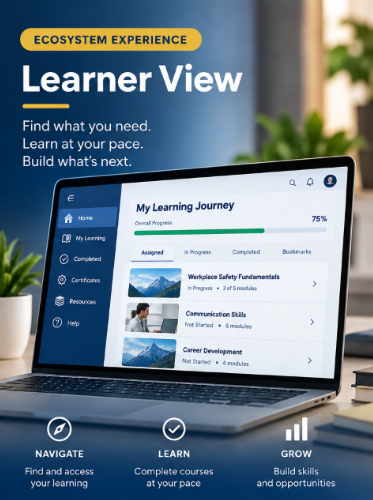
Learner Journey + System Navigation
Experience Architecture
See how the same ecosystem supports learners with clear entry points, expectations, assigned learning, progress visibility, resources, and a coherent path forward.
Different challenges. Different deliverables. One systems-level approach.
Explore additional examples of how strategy, curriculum, learning infrastructure, performance support, and implementation come together to create practical learning ecosystems.
Professional foundations that strengthen the work.
Continued learning adds context to the practice without becoming the positioning itself.
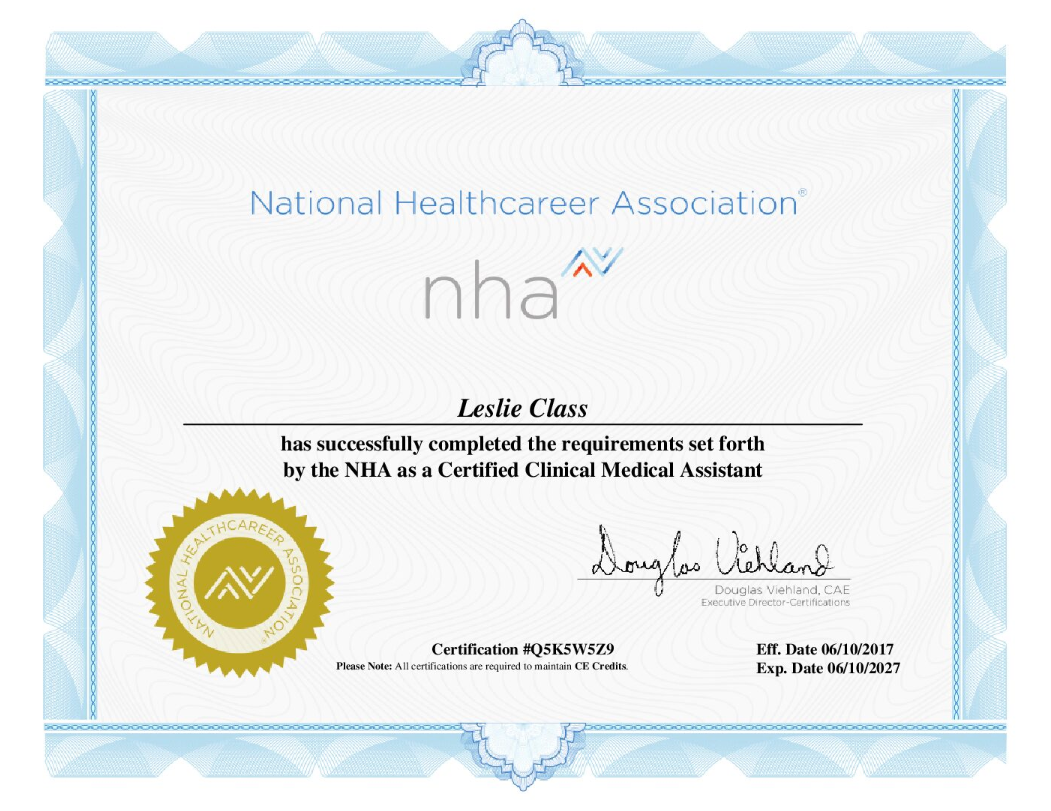
Certified Clinical Medical Assistant
Credential Context + Relevance
Clinical grounding that continues to inform healthcare education, workforce readiness, and structured training.
How this informs the work
Direct clinical context strengthens decisions around learner readiness, role expectations, skills practice, performance support, and healthcare learning environments.
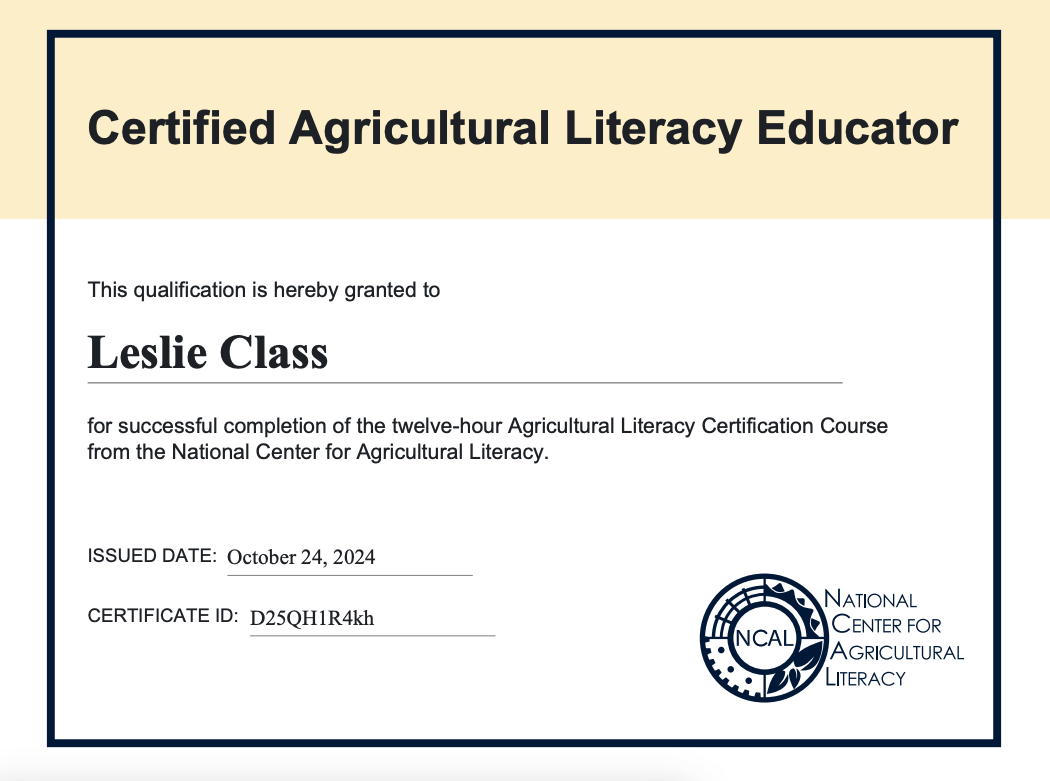
Certified Agricultural Literacy Educator
Credential Context + Relevance
Educational range and the ability to translate specialized content into clear learning for varied audiences.
How this informs the work
Reinforces the ability to organize specialized or unfamiliar subject matter into meaningful learning experiences while preserving accuracy and depth.
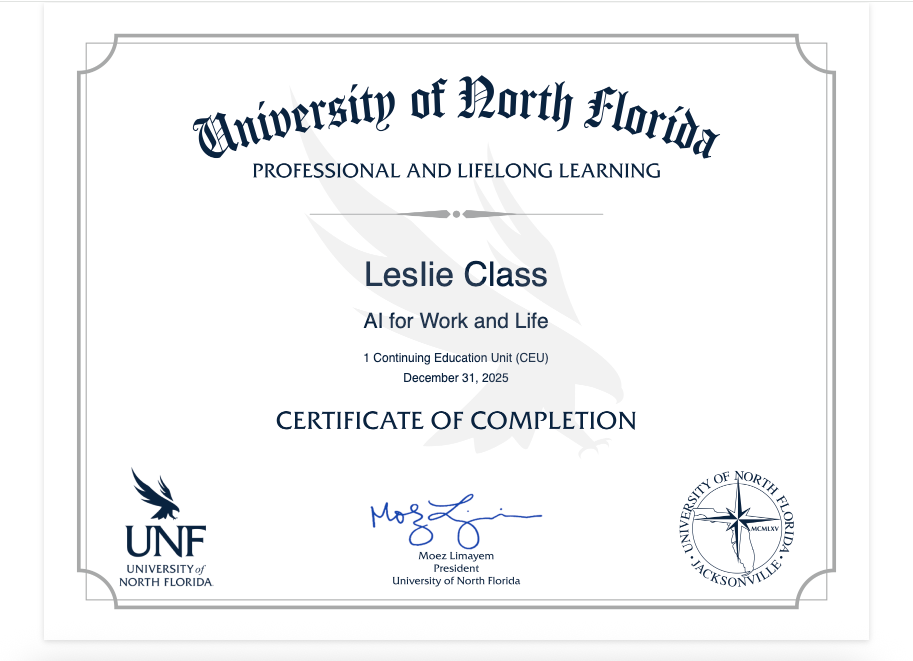
AI for Work + Home Life
Credential Context + Relevance
Continued development in AI and digital tools supporting research, workflows, analysis, and learning environments.
How this informs the work
Supports responsible use of emerging tools to improve research, workflow efficiency, content development, analysis, and technology-enabled learning systems.
Credentials strengthen the foundation. The portfolio demonstrates how that knowledge becomes systems, experiences, resources, and performance support.
Strategy informed by implementation. Architecture shaped by real-world use.
My perspective has been shaped by teaching, building programs, developing workforce pathways, supporting operations, implementing learning systems, and designing the resources people use to perform.
That experience changes how I approach consulting. I look beyond the requested deliverable to understand the people, workflows, infrastructure, content, and implementation conditions surrounding the work.
This means recommendations are shaped not only by what should work in theory, but by what people can realistically adopt, maintain, navigate, and use within the conditions of the organization. The goal is to create learning infrastructure that remains practical after implementation— not simply at launch.
Whole-System Perspective
Connect curriculum, technology, workflow, people, performance expectations, and organizational requirements so the learning solution works as a coordinated system— not as an isolated deliverable.
Practitioner-Informed Design
Recommendations grounded in experience building, teaching, launching, supporting, and improving the work.
Flexible Delivery Capacity
Expertise and implementation support can expand around the scope and complexity of the engagement.
Strategic Continuity
Keep the work aligned to one coherent learning strategy while drawing on specialized expertise needed for delivery.
Work, impact, and expertise recognized beyond the work itself.
Recognition provides context. The portfolio provides the evidence.

Perspective shaped by real operating environments.
Healthcare, workforce, community, and organizational environments continue to inform how learning ecosystems are designed for implementation, adoption, and sustained use.
Additional context behind the practice and the business.
Professional certification and supplier-diversity affiliations provide additional context around organizational relationships and business infrastructure supporting LC Career Center.
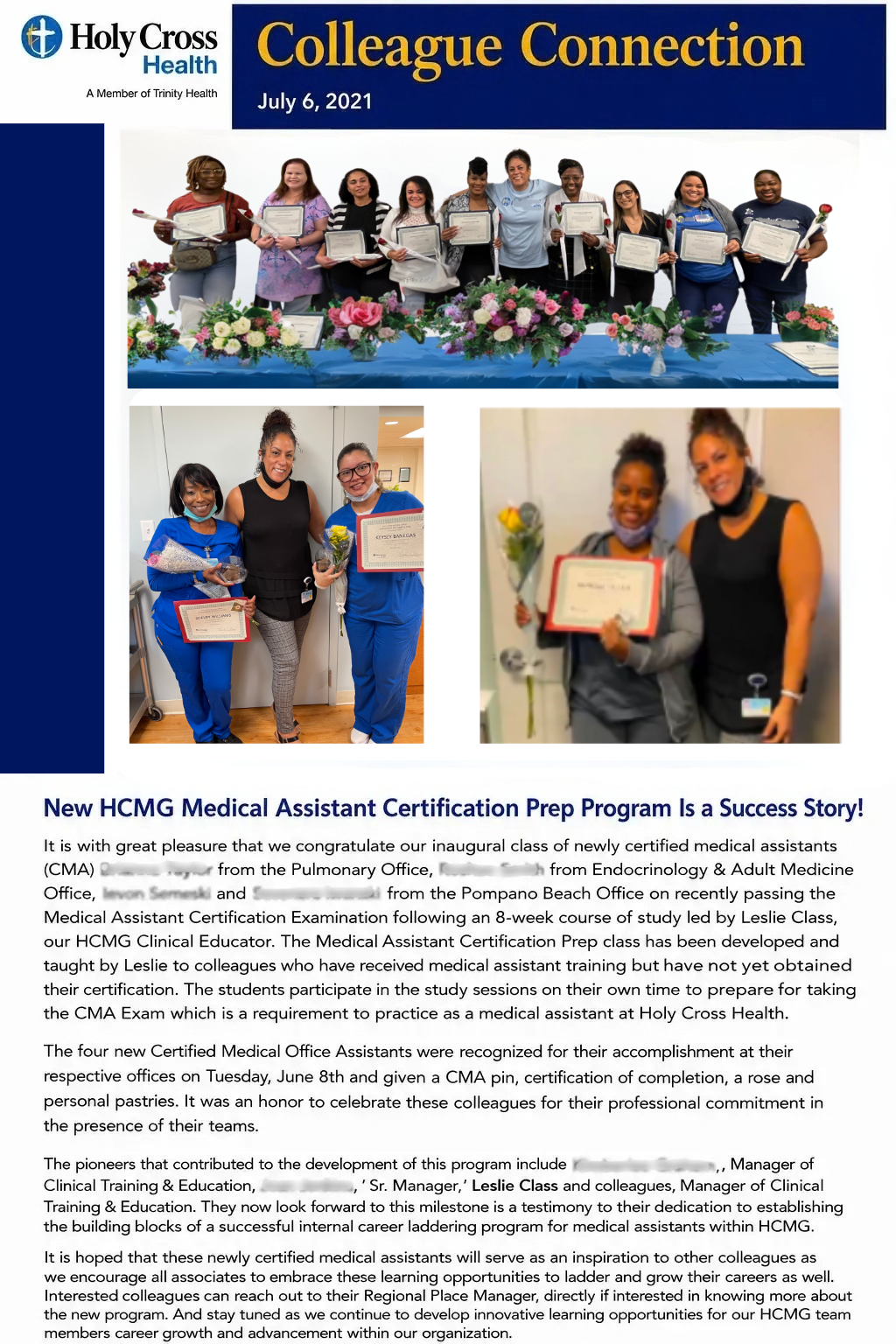
Workforce development made visible through outcomes.
Programs matter when they translate into stronger capability, increased confidence, career momentum, and meaningful organizational performance. Here, the architecture becomes visible through implementation, learner experience, and results.
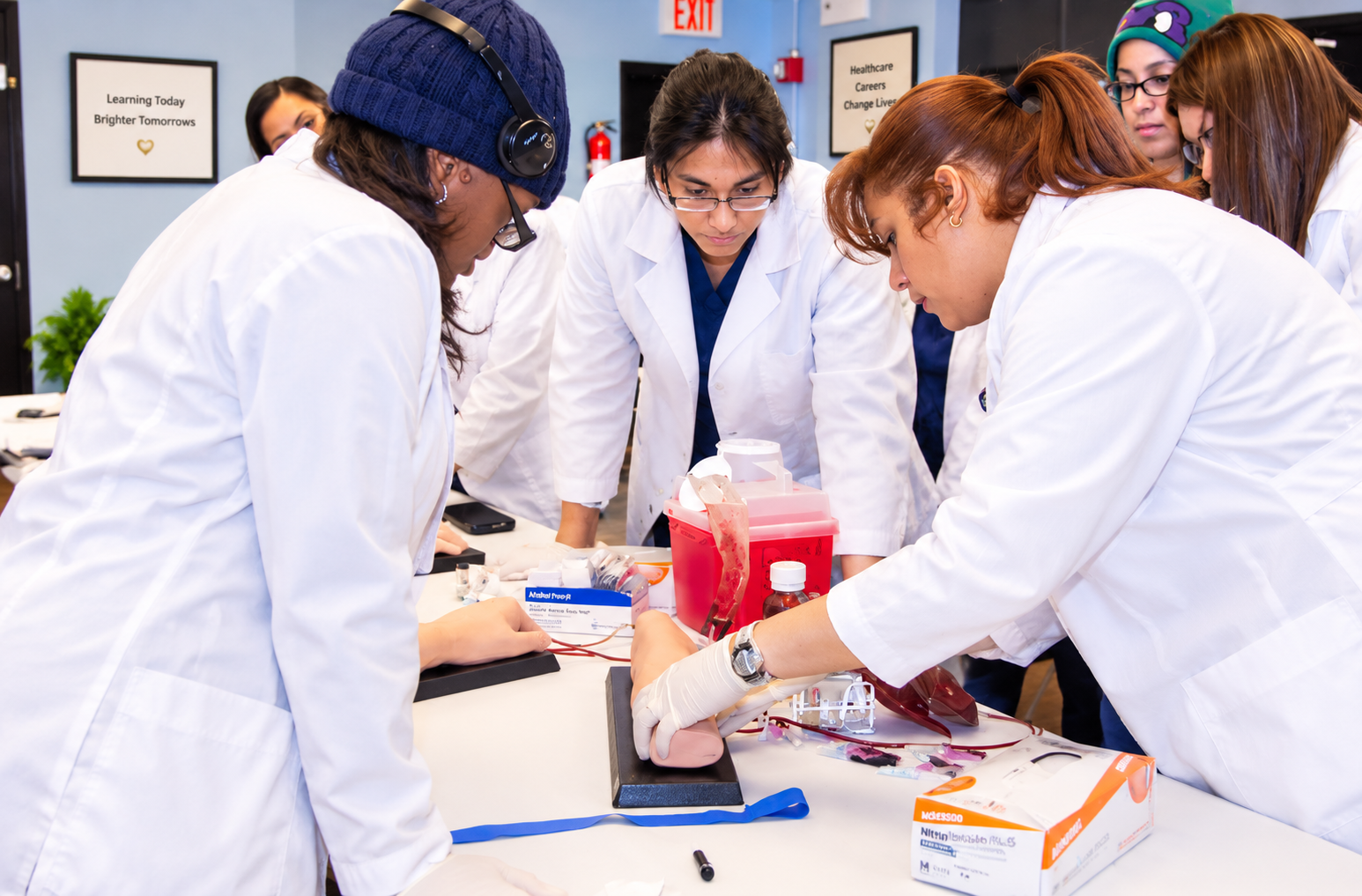
Learning designed to move from preparation to performance.
The Medical Assistant Certification Prep initiative connected structured learning, applied practice, certification preparation, and workplace relevance to strengthen employee capability and create meaningful pathways for advancement.


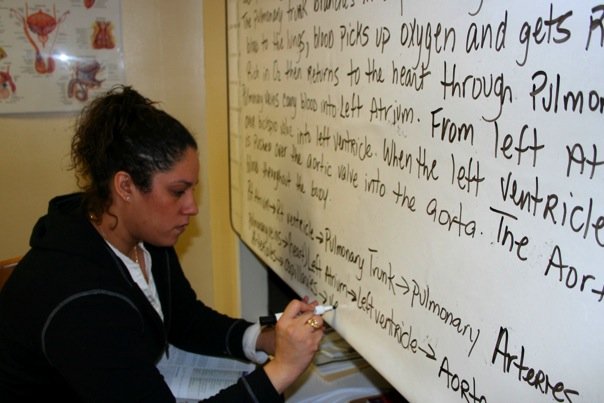


The outcomes are personal. The impact extends further.
Real stories from learners show what workforce initiatives can make possible when learning is relevant, applied, and connected to meaningful professional opportunity.
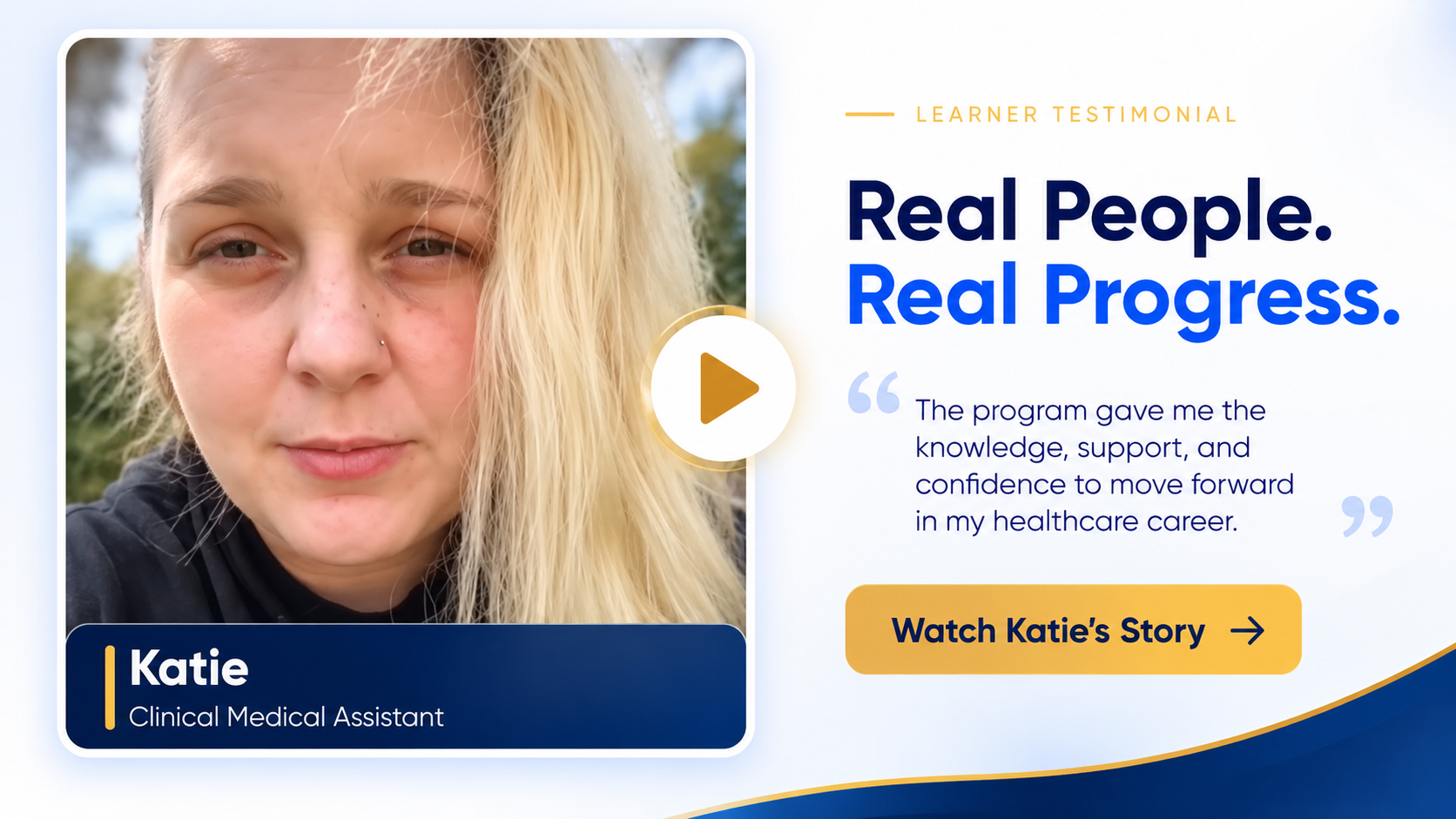
What partners and learners say about the work.
Outcomes are reflected not only in completed programs, but in confidence gained, professional growth, organizational value, and the ability to apply learning in real environments.