Empowering Growth Across Industries.
Training. Technology. Strategy. Impact.
Cross-sector learning solutions designed to advance people, strengthen organizations, and create measurable, sustainable impact.
Start the ConversationTurn complex learning and workforce challenges into practical systems people can use.
LC Career Center helps organizations design learning ecosystems, workforce programs, digital experiences, and implementation pathways that connect strategy with how people actually learn, work, and perform.
Whether the need is to modernize an existing learning environment, build a new capability, strengthen workforce pathways, improve knowledge transfer, or solve a complex performance challenge, the work begins with the operating need—not a predetermined platform, tool, or deliverable.
The objective is not simply to deliver training. It is to create a learning system that is easier to navigate, easier to sustain, and more closely connected to performance, workflow, and organizational priorities.
People understand what to learn, where to find it, and how it supports the work they are expected to perform.
Learning, support, workflow, and implementation are designed as connected parts of the same operating system.
Systems are structured to be maintained, expanded, and improved as organizational needs evolve.
Strategic support across the learning ecosystem.
Engagements can address one defined challenge or connect multiple workstreams into a broader learning, workforce, and performance system.
Learning & Curriculum Architecture
Design onboarding, upskilling, technical training, learning pathways, assessments, and applied learning around the capabilities people need to perform.
What This Includes
- Curriculum Architecture
- Learning Pathways
- Technical Training
Learning Ecosystems & Infrastructure
Design the architecture, governance, user journeys, learning operations, content structure, and infrastructure that support a connected learning experience.
What This Includes
- Learning Infrastructure
- Governance
- User Journeys
Workforce Enablement
Build role readiness, career pathways, transition support, facilitator capability, performance reinforcement, and adoption around real workforce requirements.
What This Includes
- Role Readiness
- Career Pathways
- Adoption & Reinforcement
Digital Learning Development
Transform complex information into structured, accessible digital learning through multimedia, scenarios, interactive experiences, and practical resources.
What This Includes
- Multimedia Learning
- Scenario-Based Practice
- Interactive Content
Performance Support & Knowledge Resources
Create SOPs, job aids, process guidance, quick-reference resources, and knowledge systems that extend learning into the moments where performance happens.
What This Includes
- SOPs
- Job Aids
- Knowledge Transfer
Strategic Consulting & Implementation
Clarify the challenge, architect the response, align stakeholders, establish implementation priorities, and support the work through launch, adoption, and refinement.
What This Includes
- Strategy
- Implementation Planning
- Optimization
A clear process. A practical path forward.
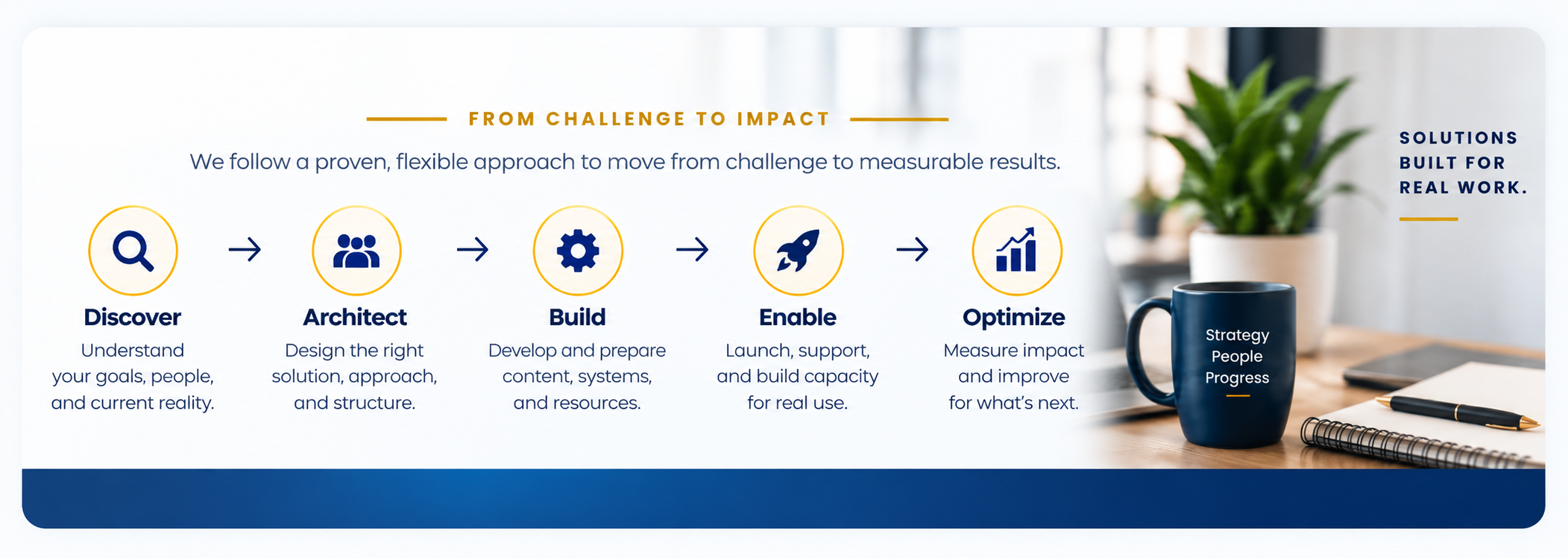
Every engagement begins with understanding the challenge, the people affected by it, and the environment where the solution must work. From there, the work moves deliberately from strategy and architecture into implementation, adoption, measurement, and continuous improvement.
Engagements can be structured around the level of support your organization needs.
Some organizations need a focused initiative with a defined outcome. Others need strategic capacity integrated with an existing team or continuity across a broader transformation. The engagement model flexes around the work.
Project-Based
A defined challenge, scope, timeline, and outcome—well suited to organizations that need a specific learning, workforce, digital, performance-support, or infrastructure initiative designed and delivered.
Embedded Collaboration
Strategic or implementation capacity works alongside internal leaders, subject-matter experts, learning teams, operations, HR, workforce, or technology partners to extend capability without disrupting existing ownership.
Strategy Through Build
Continuity from discovery and solution architecture through development, implementation, launch, and refinement helps preserve strategic intent as the work moves from planning into real-world use.
You do not need to know the exact service before starting the conversation.
Bring the challenge, current state, or outcome your organization is trying to reach. We can identify the most useful starting point and determine what kind of support makes sense.
Strategy designed around the environment where performance actually happens.
Effective learning systems require more than strong content. They must work within real workflows, organizational priorities, existing infrastructure, operating constraints, and the day-to-day experience of the people expected to use them.
LC Career Center approaches the work as a connected ecosystem— bringing together learning strategy, curriculum architecture, workforce enablement, digital experience, performance support, implementation, and continuous improvement around the organization’s actual need.
Whole-System Perspective
Learning, workflow, infrastructure, content, governance, support, and implementation are considered as connected parts of one operating ecosystem.
Practitioner-Informed Design
Recommendations are grounded in experience designing, teaching, building, launching, supporting, and improving learning and workforce programs in real operating environments.
Cross-Sector Insight
Experience across industries and operating environments strengthens the ability to recognize what can transfer, what must adapt, and what requires a purpose-built response.
Flexible Delivery Capacity
Engagements can scale around the strategy, specialized expertise, collaboration, production capacity, and implementation support required by the work.
Bring the challenge. We’ll help define the right path forward.
Whether the need is a focused initiative, additional strategic capacity, or a broader learning and workforce transformation, the conversation can begin with the problem, current state, or outcome your organization is trying to address.
Strategy strengthened by experience behind the solution.
Consulting recommendations are informed by direct experience across healthcare, education, workforce development, curriculum architecture, digital learning, implementation, and organizational operations.
The value is not simply in holding credentials or professional affiliations. It is in knowing how specialized knowledge, learning architecture, workforce realities, operating constraints, and implementation requirements come together to create systems people can actually use.
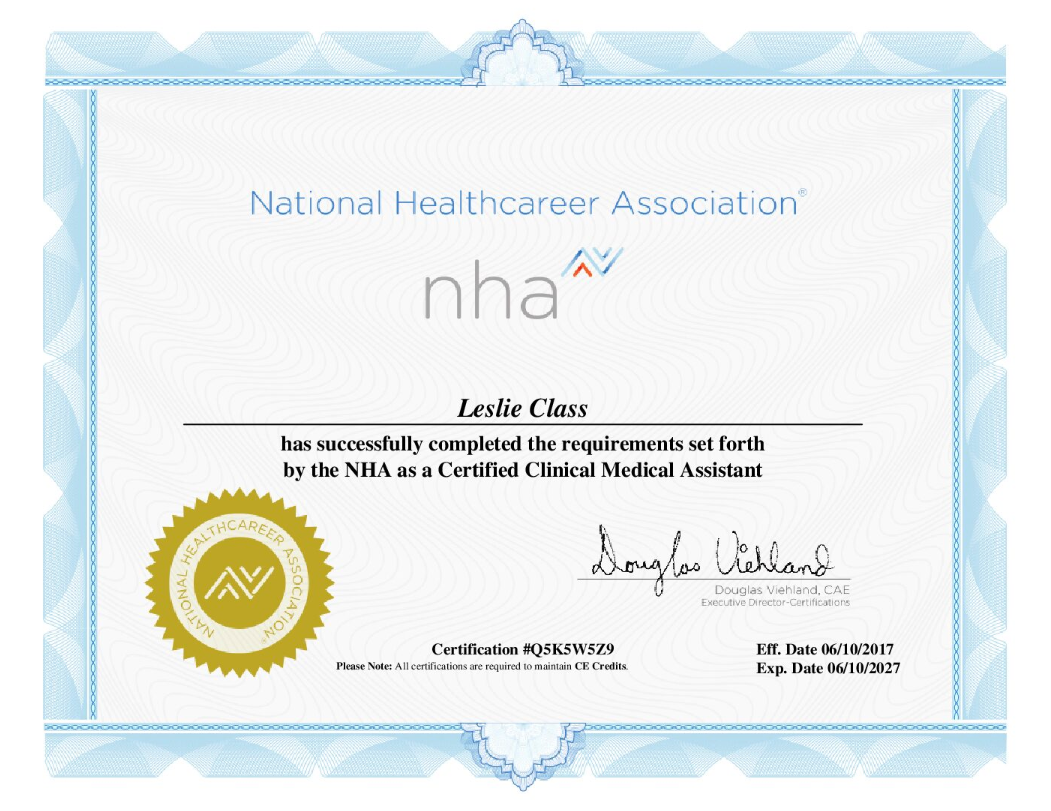
Certified Clinical Medical Assistant
Clinical experience that continues to inform healthcare education, workforce readiness, role preparation, and applied learning design.
How this informs the work
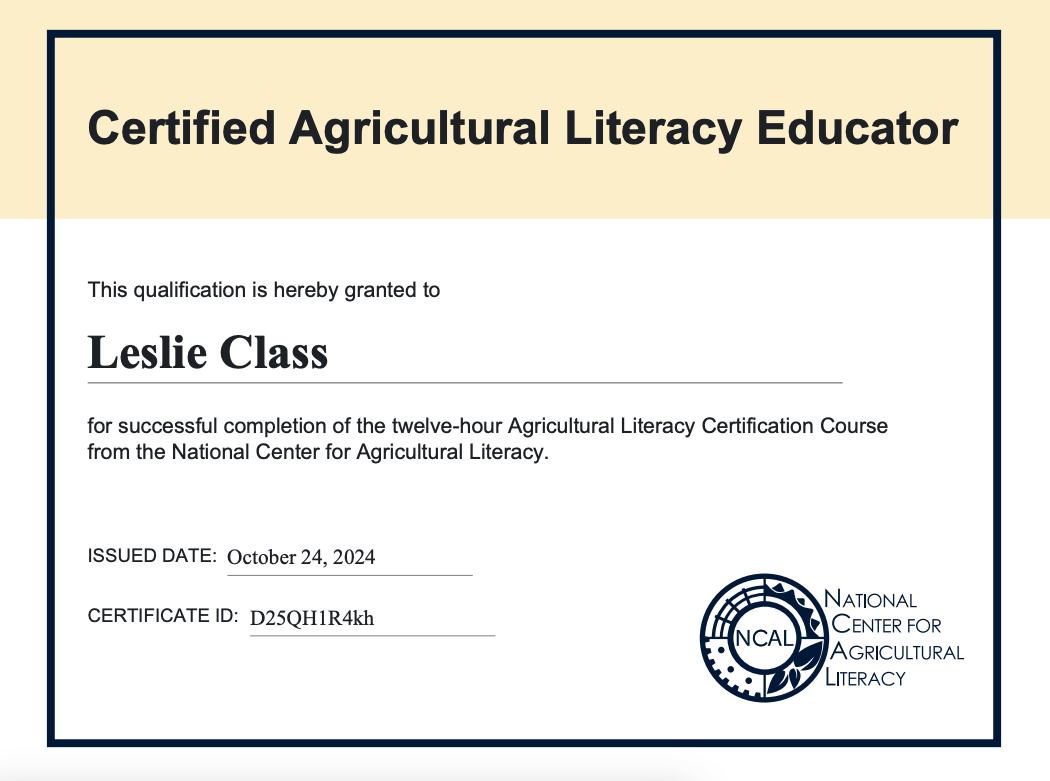
Certified Agricultural Literacy Educator
Demonstrates instructional range and the ability to translate specialized subject matter into practical, accessible learning for varied audiences.
How this informs the work
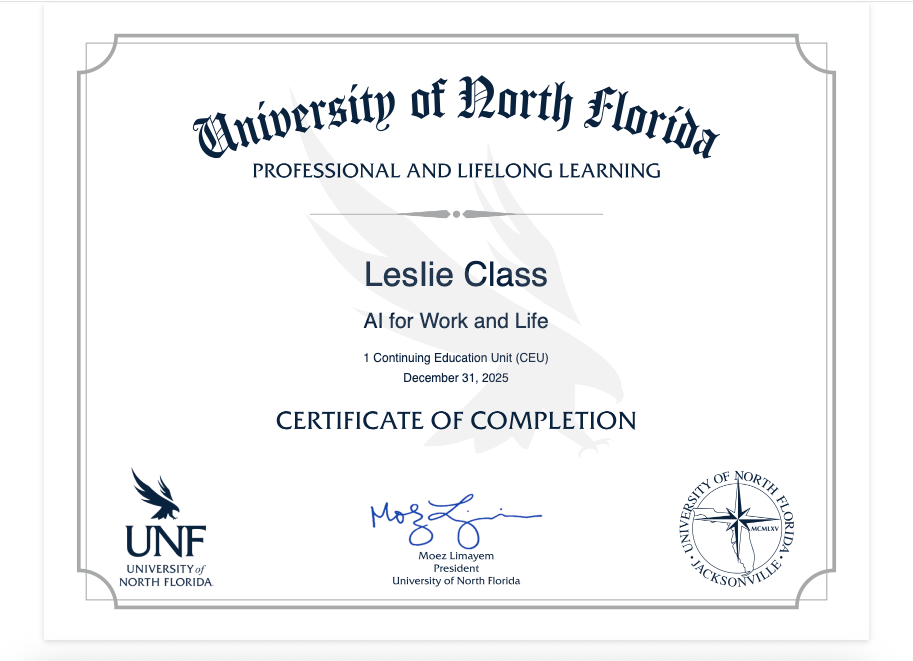
AI for Work + Home Life
Continued development in AI and digital methods supporting research, workflow improvement, analysis, knowledge work, and technology-enabled learning.
How this informs the work
Credentials strengthen the foundation. Consulting value comes from applying that knowledge to the architecture, workflows, decisions, systems, and implementation realities surrounding the work.
Perspective shaped by real operating environments.
Experience across healthcare, workforce, community, education, and organizational settings continues to shape how learning systems are designed for adoption, implementation, usability, and sustained performance.
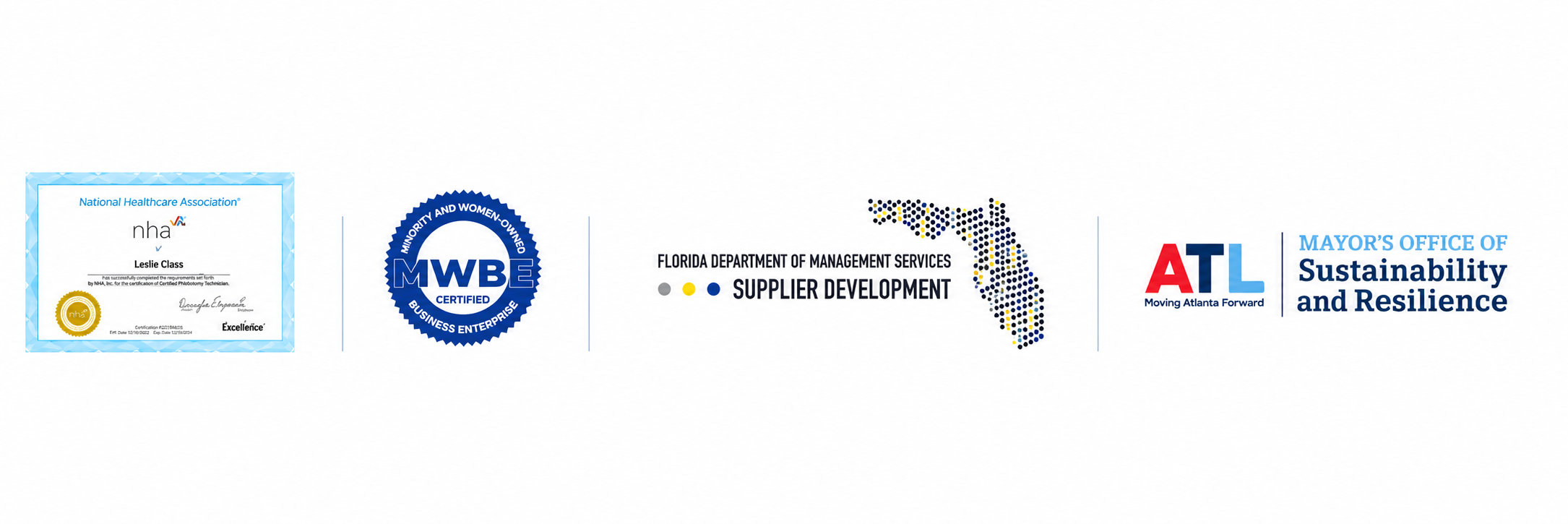
Professional foundations behind the practice and the business.
Professional certifications and supplier-diversity affiliations provide additional context around the professional standards, business infrastructure, and organizational relationships supporting LC Career Center.
A professional journey recognized beyond individual engagements.
Founder features, community coverage, television, entrepreneurial media, and radio recognition provide additional context around the experience, mission, and work behind LC Career Center.
Explore the Founder Story →
What partners say when strategy moves into practice.
The strongest evidence of the work is not another description of the service. It is what clients, collaborators, and organizational partners say after ideas move into implementation.
Explore More Results →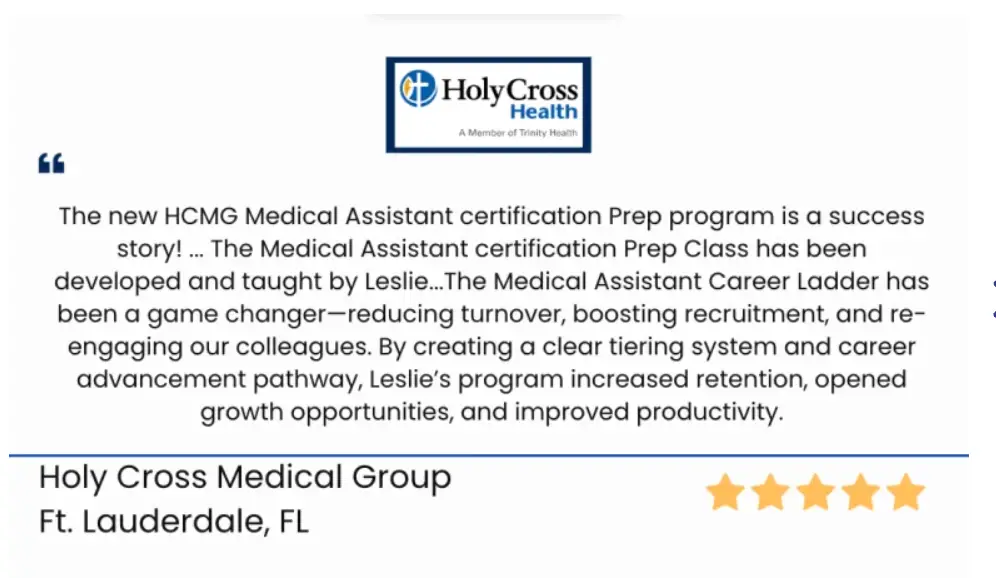
Start with what people need to do better.
From there, we can determine the learning architecture, infrastructure, content, workflow, implementation support, and performance resources the organization actually needs.
Common questions about learning systems, delivery, and implementation.
Every organization has a different operating environment, audience, infrastructure, and performance challenge. These answers provide a practical starting point for understanding how LC Career Center approaches learning ecosystems, digital learning, implementation, and sustained performance support.
What is a Learning Management System?
A Learning Management System, or LMS, is a digital environment used to organize, deliver, manage, and track learning. Depending on the environment, it may support courses, learning pathways, assessments, resources, completion tracking, credentials, communication, and reporting.
LC Career Center is platform-agnostic. The focus is on learning-system architecture, curriculum structure, content organization, governance, deployment planning, and learner experience—so the infrastructure supports the organization’s actual learning and performance requirements.
What does a well-designed learning system improve?
A well-designed learning system can create a more consistent learner experience, make resources easier to find, strengthen knowledge transfer, improve role readiness, reduce repeated manual explanation, and make learning easier to maintain and expand.
The real value comes from how curriculum, content, workflow, infrastructure, governance, support, and measurement operate together—not simply from having technology in place.
Why is collaborative learning important?
Collaboration gives people opportunities to examine ideas, practice decisions, compare perspectives, solve problems, receive feedback, and learn from one another. Those interactions can deepen understanding and make learning more relevant to real work.
Collaborative elements can be incorporated into live instruction, virtual sessions, peer practice, scenarios, discussion activities, coaching, cohort experiences, and blended learning pathways when they support the performance objective.
Do you offer pilots, prototypes, or phased engagements?
Yes, when a phased approach makes sense for the work. A pilot, prototype, discovery phase, sample experience, or staged implementation can help test assumptions, clarify requirements, and validate direction before a larger investment or rollout.
The appropriate approach depends on the challenge, audience, level of risk, organizational readiness, scope, and intended outcome.
What kind of implementation support is available?
Implementation support can include learning-system organization, course deployment, content troubleshooting, learner guidance, workflow alignment, documentation, digital resource development, launch planning, stakeholder coordination, adoption support, and refinement after launch.
The level of support is matched to the engagement rather than applied as a standard package.
How can digital learning be delivered?
Digital learning can be self-paced, instructor-led, live virtual, asynchronous, blended with onsite instruction, incorporated into a structured learning pathway, or delivered as performance support within the flow of work.
The delivery model should reflect the audience, performance expectations, subject matter, available infrastructure, and the amount of practice, interaction, feedback, or reinforcement required.
How do learners engage in digital experiences?
Learners may progress independently, participate in virtual sessions, complete scenarios and assessments, practice decisions, use job aids, review multimedia resources, complete assignments, engage in discussion, or work directly with a facilitator.
Interaction should exist for a reason. The experience should be designed around what people need to understand, practice, retain, and apply—not around adding activity for its own sake.
How long should a learning experience take?
There is no universal duration. A targeted job aid or performance-support resource may require only a few minutes, while onboarding, technical training, credential preparation, or a workforce-development pathway may extend across hours, days, weeks, or multiple learning stages.
Duration should be driven by the capability being developed and what learners need to understand, practice, retain, demonstrate, and apply in the work environment.
What is included in project fees?
Scope varies by engagement. Project fees may account for discovery, strategy, architecture, curriculum design, development, multimedia, revisions, implementation planning, facilitation, documentation, project coordination, or other agreed deliverables and support.
Custom engagements are scoped before development so responsibilities, assumptions, deliverables, dependencies, and expectations are clear before the work begins.
Can LC Career Center support work outside a listed service?
Yes. Many organizational challenges do not fit neatly inside a single service category. An engagement may connect learning strategy, curriculum architecture, workforce enablement, digital learning, infrastructure, performance support, multimedia, knowledge resources, and implementation.
The starting point is the challenge. The solution is then structured around what the organization and its people actually need to perform, adopt, sustain, or improve.